
Thinning Hair Extensions: What Works and How to Choose
Thinning Hair Extensions: What Works and How to Choose
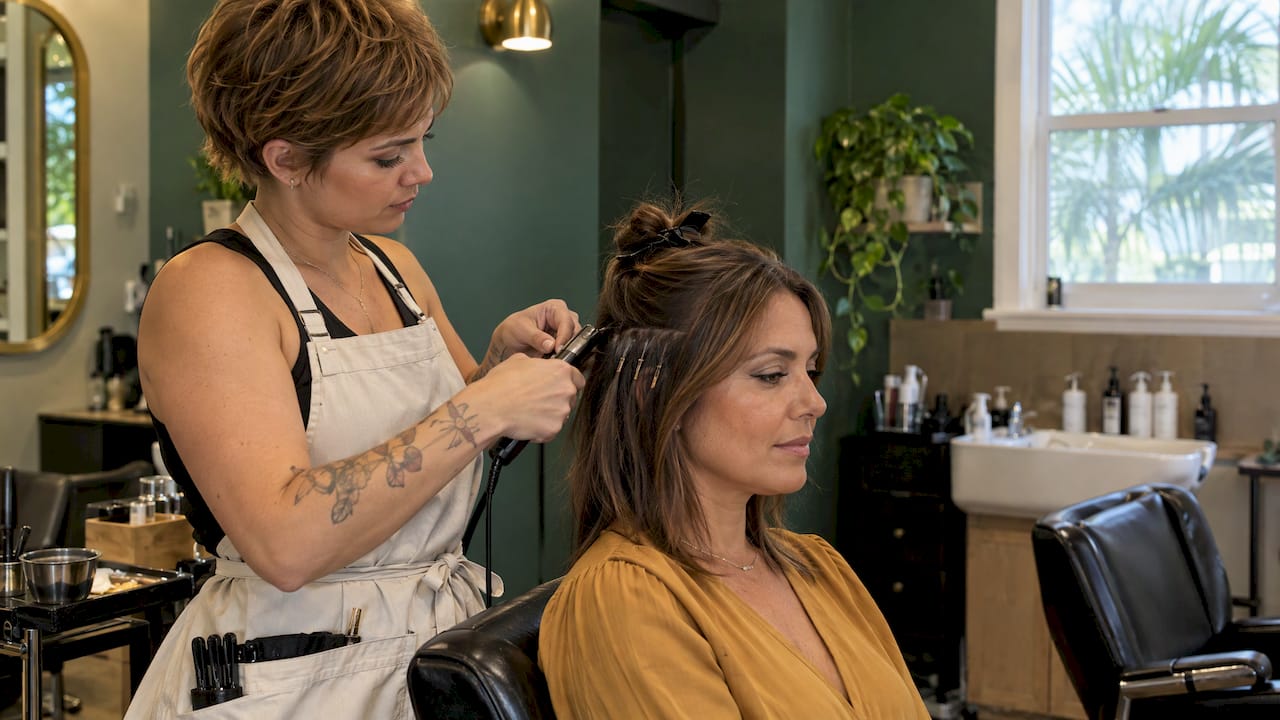
Extensions can give fine or thinning hair real fullness, but only when the method, weight and placement are matched to the hair you have. The right first step is an assessment, not a menu: a stylist should look at your density, your scalp and the stability of your hair before recommending anything. At Autumn Markley Salon in Fort Lauderdale, that assessment is a free consultation, and it comes before any method is chosen.
TL;DR
- Extensions suit fine hair or stable, low-density hair. They are not a treatment, and new or rapidly increasing shedding should be seen by a board-certified dermatologist first.
- Weight and tension matter most. Lighter, small-attachment methods placed on healthy hair are the gentlest route.
- A thinning crown often cannot hide conventional extensions, so placement and blending decide the result.
- Plan for breaks and maintenance: dermatology guidance recommends not wearing extensions continuously for long stretches.
- Our AMFusion K-tip install takes about 2 to 2.5 hours, so color and extensions can be done in one visit.
Table of Contents
- Are extensions a good idea for thinning hair?
- What the evidence says about tension and weight
- Which methods are gentlest for fine hair
- What about a thinning crown?
- How long to wear them, and how to care for them
- One visit for extensions and color
- What happens at a consultation
- Our point of view
- Book a free consultation
- FAQ
- Sources
Are extensions a good idea for thinning hair?
Sometimes, yes. Extensions work well for people whose hair is naturally fine or whose density is low but stable. They are a cosmetic tool, not a treatment, and they should not be used to conceal new, active or unexplained loss. One company guide on extensions and hair loss says the cause and stability of the loss should be clear first, and that there must be enough healthy hair in the attachment zones to support and hide the install.
See a board-certified dermatologist before any extensions if you notice:
- new or rapidly increasing shedding
- sudden bald spots or a widening part
- a receding hairline
- scalp pain, burning, sores, redness or scaling
Many women in their 40s and 50s notice thinning from perimenopause, stress or medication. If that is you, our guide to perimenopause hair thinning explains common causes. Once a doctor has confirmed the picture is stable, extensions become a sensible way to add body.
What the evidence says about tension and weight
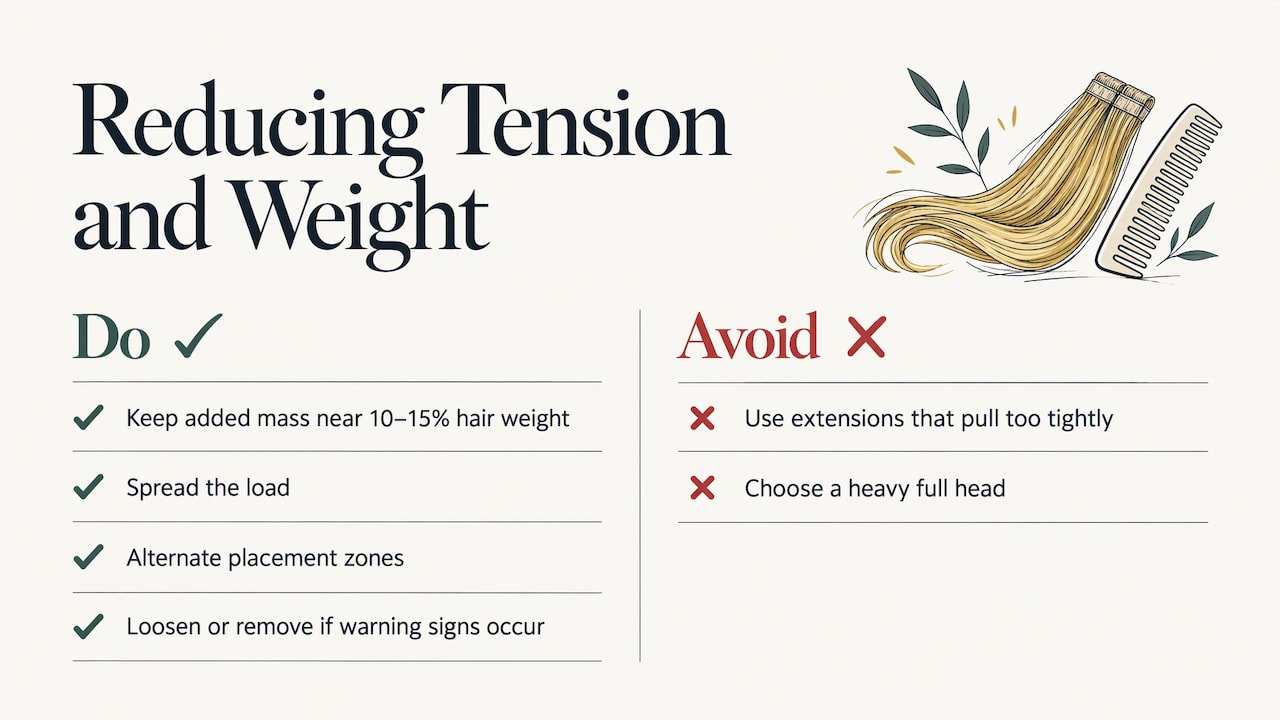
The risk to take seriously is traction. The American Academy of Dermatology says extensions and weaves that pull too tightly can cause traction alopecia, and continued pulling can lead to permanent loss. Warning signs include pain, stinging, scalp crusts, broken hairs around the forehead and patches where hair is pulled. If you feel any of these, the style should be loosened or removed.
Weight is part of the same story. A 2026 review in the Journal of Craniofacial Surgery Open recommends keeping added extension mass to roughly 10 to 15% of native hair weight, spreading the load and alternating placement zones. In plain terms: fewer, lighter pieces placed with care beat a heavy full head.
This is why a one-size menu does not suit thin hair. The amount of hair added should be set by what your own hair can carry.
Which methods are gentlest for fine hair
A 2023 review in the International Journal of Women’s Dermatology favors loosely sewn-in or microring extensions over adhesive glue for camouflage, and advises against lengths beyond shoulder length. Here is how the methods we offer compare in plain language.
| Method | How it attaches | Why it suits fine hair |
|---|---|---|
| K-tip / AMFusion | Small keratin bonds on individual strands | Light, individual pieces that can be placed where hair is strongest and blended |
| Invisible Bead | Tiny beads, no glue or heat | Small attachment points for fine hair |
| Hand-tied wefts | Thin, flat wefts sewn or beaded in | Lies flat with very little bulk |
| Machine-tied wefts | Sturdier wefts | Fuller coverage where there is enough density |
We work with K-tip and fusion, hand-tied and machine-tied wefts, Great Lengths, Bellami and Invisible Bead, so the method follows your hair rather than the other way around. You can read more on invisible bead extensions for fine hair and on hand-tied weft extensions.
Why K-tip works for many thin-haired clients
K-tip extensions go in one small piece at a time, so a stylist can choose exactly where each one sits and how much weight your hair carries in each zone. That control is the reason the method suits fine hair. Our own approach, AMFusion, is a keratin-fusion K-tip method that Autumn Markley developed and teaches to other stylists. Details are on our K-tip extensions page.
What about a thinning crown?
The crown is the hardest area. Extensions often cannot hide thinning there because the hair may lack the density to support and cover them, and toppers or integrated pieces are designed for sparse crowns. A dermatologist’s guide to prostheses says a topper suits localized crown thinning, provided there is enough natural hair to attach to securely.
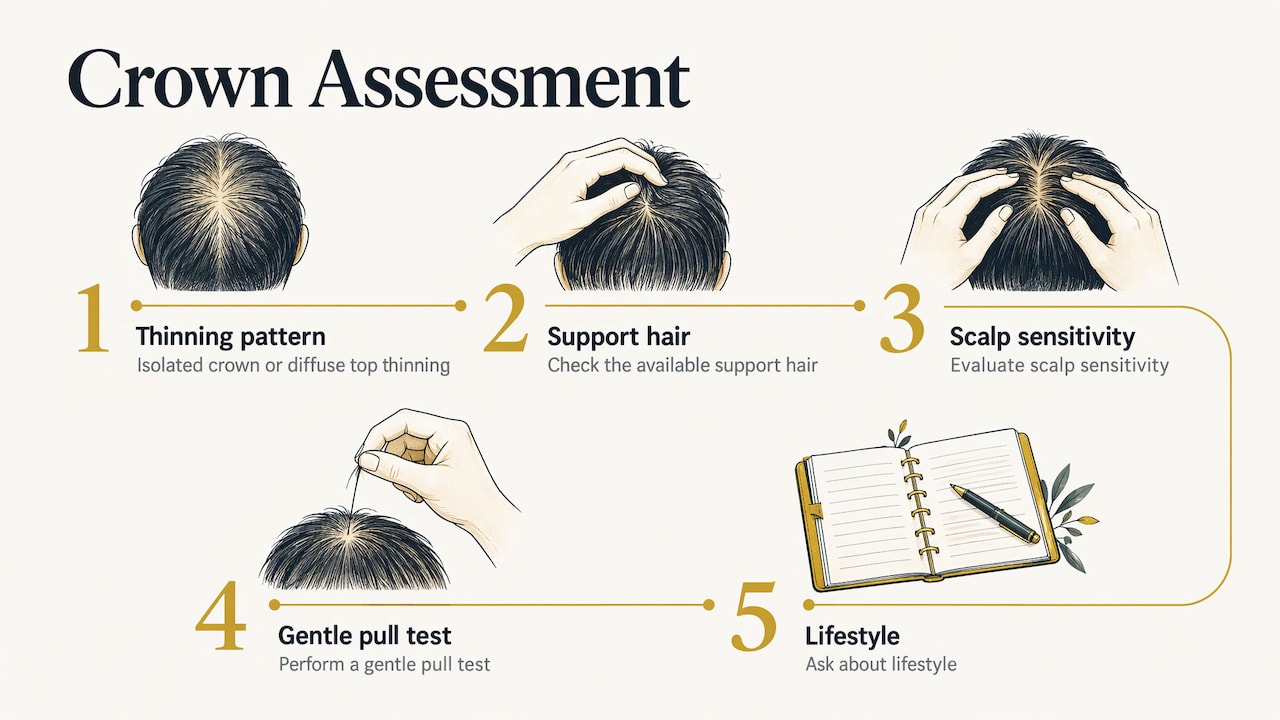
For extensions, the usual approach is to place most of the density in the stronger lower and middle sections at the back and sides, and keep the crown, temples and hairline conservative. A stylist’s crown guide describes a step-by-step assessment: look at the pattern (isolated crown or diffuse top thinning), check the support hair, evaluate scalp sensitivity, do a gentle pull test and ask about lifestyle. That is what our consultation is built around. How the extensions disappear into your own hair is covered in our piece on extension blending.
How long to wear them, and how to care for them
The AAD advises wearing extensions two or three months at most, then giving hair a break. It also advises keeping your own hair clean, free of buildup and well conditioned while you wear them. The 2026 craniofacial review suggests 6 to 8 weeks on followed by 2 to 3 weeks off for people with traction concerns.
In practice, that means:
- Book maintenance visits on schedule so bonds are moved up as your hair grows, rather than left to loosen and pull.
- Use a gentle, moisturizing shampoo and conditioner.
- Take extensions out and see a dermatologist if you feel pain, tightness, bumps or crusting along the hairline.
- Plan rest periods between sets.
Our care and maintenance guide covers home routines, including South Florida sun, chlorine and salt water.
One visit for extensions and color
Blending extensions to your color matters, and doing both in one sitting saves a second trip. Autumn says her 2 to 2.5 hour K-tip install is much faster than the usual, which is what makes color and extensions in a single visit possible. If you are a blonde, we also do dimensional color, balayage, gloss and toning. Our published prices include a gloss at $75 and a full highlight and tone from $295 to $375. Extension pricing is set after the consultation, because the amount of hair depends on your head.
What happens at a consultation
Expect the stylist to ask about your history, look at density and scalp, and decide which method and how much hair, if any, make sense. If your hair is better served by a treatment first, such as bond repair, we say so. Our guide to what to expect and ask at a consultation lists good questions to bring, and our article on hair extensions for thinning hair in Fort Lauderdale goes deeper locally.
Our point of view
Thin hair deserves a plan, not a package. Most women who come to us with thinning have been told to just add more hair. We start from the opposite end: how much can your hair carry comfortably, and where?
That is why we offer every major extension system. A method should be chosen after we have looked at your hair, never before. For fine and thinning hair, we lean toward small, light attachments, careful placement and thorough blending.
AMFusion is the keratin-fusion approach I built over 20 years behind the chair. It is designed to be thorough and quick, so you can leave with extensions and color done in one visit.
Autumn Markley
Book a free consultation
If you want to find out whether extensions suit your hair, AMFusion at Autumn Markley Salon starts with a free consultation in Fort Lauderdale. We match the method to your hair, from K-tip to wefts to Invisible Bead, and can pair it with color in the same visit.

You can also see all service pricing or our Fort Lauderdale salon page.
FAQ
Are hair extensions good for thinning hair?
They can be, when the thinning is stable and there is enough healthy hair to support them. Light, small attachments placed with care add fullness without heavy tension. New or fast shedding should be checked by a dermatologist first.
Can extensions cover a thinning crown?
Often not on their own, because the crown may lack the density to hide them. Placement around the crown and blending can help, and for sparse areas a topper may be a better fit. A consultation shows which applies to you.
Can extensions cause hair loss?
Extensions that pull too tightly can cause traction alopecia, according to the American Academy of Dermatology. That is why weight, placement and timely maintenance matter, and why pain or tightness means the style should come out.
How long can I wear extensions with fine hair?
The AAD suggests two to three months at most, then a break. Regular maintenance visits keep bonds from loosening and pulling on your own hair.
Sources
- Hair Extensions and Hair Loss: What to Know
- Hairstyles that pull can lead to hair loss (AAD, FAQ)
- How to prevent hair damage from a weave or extensions (AAD)
- Hair Extensions: Anatomic, Biological, and Clinical
- Considerations and recommendations on camouflage in alopecia
- Hair Extensions for Thin Hair: Do’s, Don’ts
- The Dermatologist’s Guide to Wigs and Hair Prostheses
- Hair Extensions for the Crown: Stylist’s Master Guide